Are we a beautiful dream come true?
Thoughts set down here are refined over time.
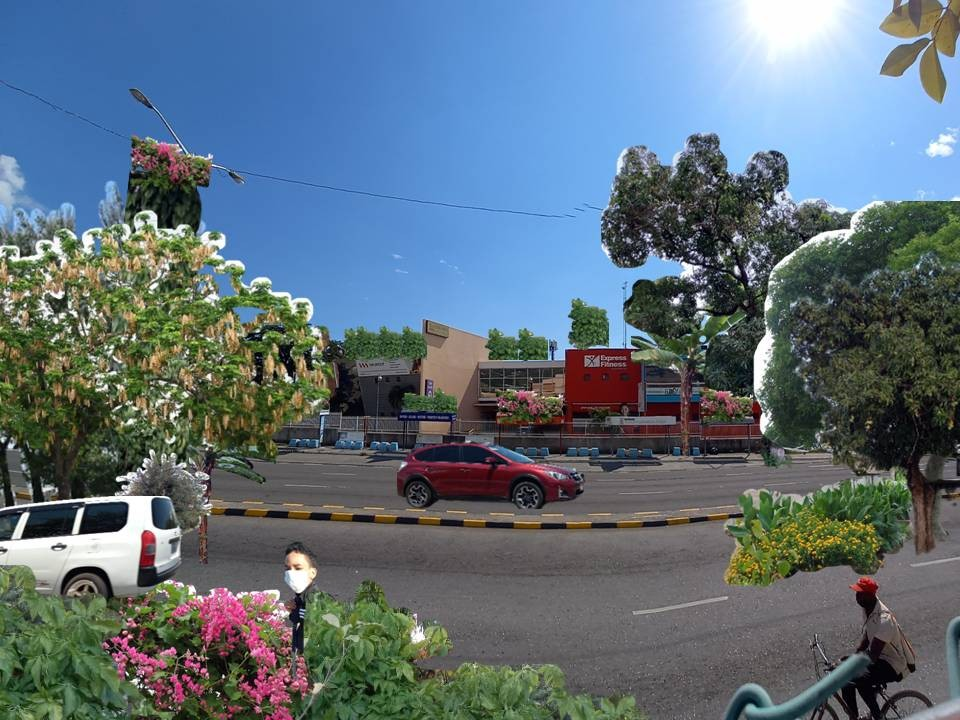
Jamaica
is a respectable state which can be depended on to contribute meaningfully on
international issues, and which is frequently called upon to even lead
initiatives. At this time, the Minster of Finance is the Chairman of the
Board of Governors of the Inter American Development Bank; the Prime Minister
is a co-chair of the UN Climate Change Financing Initiative; our sports
administrators have chaired the Commonwealth Games Federation and been the
President of the International Netball Federation. A Jamaican is currently the
Chef de Cabinet for the General Secretary of the United Nations.
The country has developed a respected and well-known
global brand in food and agro products like the jerk flavours and marijuana
products; travel and tourism such as the all-inclusive hotel concept, and
attractions like Dunns River Falls and even in holidays from the edge in Trench
Town. In popular music of note is ska, reggae and dancehall. Our athletics and
leadership in winter sports is legendary. This is separate from other
achievements by individuals who are performing without a brand being wrapped
around them such as Jamaicans abroad like the mariners, agricultural workers,
fashion models; commercial airline pilots, health care workers and teachers and
writers across genres.
These achievements can be connected to the Throne
Speech of Wednesday March 31, 1965. I select that one as the Gleaner’s
Parliamentary Reporter did not have much in content of the throne speeches of
1962 to 1964. The year of 1965 is when the speech delivered the government’s
clear intent.
It declared that citizens will occupy officer ranks
in the Jamaica Defence Force. I am willing to believe that this has been true
for a lifetime and in 2021, the chief holding the baton is a Jamaican woman.
Governor General Clifford Campbell read that a
Jamaica Stock Exchange would be established, and certainly one has been in
operation since 1968.
A clear need, the throne speech read, was financial
and technical assistance for the development of all kinds of industry in
Jamaica. The years before independence experienced growth of the mining
industry and start of the decline of plantation agriculture had not yet had an
impact.
In 1967 The Jamaica Development Bank assumed the
development responsibilities, and this caused the eight-year-old Development
Financial Corporation to be closed. In 1982, the Jamaica Development Bank was
subsumed under the National Development Bank of Jamaica and in 2000 the
Development Bank of Jamaica took over the role of that bank and also the
Agricultural Credit Bank. These were all state-owned institutions focused on
delivering loans and grants to industries. The existence of such an institution
or others within the government is a fulfilment of the leaders of the newly
independent Jamaica.
At one of the April 2022 promotional events to launch
his latest book, “How Britain Underdeveloped the Caribbean”, Vice Chancellor of
the UWI Sir Hilary Beckles, noted that the UK took the plan that the West
Indian leaders developed for itself and used it to help to formulate the
Colombo Plan, which promoted economic and social initiatives in the Pacific
starting in 1951. This grouping has expanded over the years to include most
countries in Asia, Iran and Oceana. It provides academic scholarships and professional
learning activities to advance social development. The Colombo Plan seems to
have evolved into a global multilateral, which was and is not the West Indian
(Caribbean) preference.
The Development Financial Corporation was established
by the Jamaican legislature in 1959. It was a response to the conclusion that
the Colonial Development Corporation that was established in 1947 - two years
after the world war (1939-1945) - was not going to support the development
needs of the region. An article that was republished by the Gleaner blankly
said that the West Indies believed that the Dominions and UK should send more
resources to support the dire situation in the colonies, specifically the West
Indies rather than to other foreign affairs imperatives of the UK. An article
like that would have been seen as an insult.
Having indigenous financial institutions was a
priority of the independence cadre and, as pointed out earlier in this note,
the original institution has given way to updated models at least three times.
Back to the other points in the throne speech:
Jamaica needed to seek additional export markets. This was done but became
manifest in 1988 with the establishment of the Jamaica Promotions Company
(JAMPRO) which is the torch bearer around the world for Jamaica for all areas
of commerce outside of tourism and hospitality.
Bauxite was first shipped commercially from Jamaica
in 1952 and its expansion had not yet reached peak at independence. The leaders
of the country said in the 1965 throne speech that it was a priority of
government to democratize ownership of industry and expand cooperatives. At
that time, agricultural lands were still largely in the hands of private
plantation style estates. What is the status today? Bauxite has become
nationalized. Sugar cane agriculture is in the control of large scale owners, a
lot of farm land has gone under concrete; some of it for urban developments and
others as resorts. Tourism, which was important at the time of independence is
also today mostly in the ownership of corporations and not in as a cooperative.
Many of these tourism interests are owned by overseas investors.
The general ideas of ownership of production was
always alive in Jamaica, but the dream of owning a small piece of something
bigger than yourself through a cooperative has not happened.
The population participates in cooperatives through
credit unions but not through industry. Cooperatives do well for promoting a
social good but perhaps not so much for shareholder value. The writers of the
1965 throne speech will be disappointed by this.
If it were up to them in 1965, Flat Bridge would be a
relic as the legislators were determined to replace it with an all-weather
roadway. We still have that thoroughfare with us and it is known more for
scenes of sadness and fear and trepidation and frustration than anything else.
No disrespect to its marvellous builders who set those volcanic stones wisely.
So, from the items raised by the Parliamentary
reporter, it would seem that the dream of 1965 has come true. The setting up of
institutions was done by the inspired and the trained and talented. What the
country needed was an educated citizenry to keep up, but full literacy was not
on the 1965 throne speech and that idea may not have emerged until 1971.
Would the leaders of 1962 be satisfied? Based on what
they wrote down as things to do, I think that they would not be dismayed.
No comments:
Post a Comment